
Probate & Real estate












Probate & Real estate
What happens when a loved one dies without making final provisions to convey the family home? When a parent dies without a will or proper deed, a home cannot be legally sold, refinanced, or owned by anyone other than the decedent’s estate.
At some point, heirs will be compelled to file a probate action in order to legally dispose or distribute the family home. This usually happens when a family member is living in the home and soon finds that they can’t get a mortgage or sell the property. Or even worse, when there is a mortgage on the home, and the lender learns of the death, the mortgage lender will call the house note due.
Probate can be a frustrating experience, especially when heirs learn that they must probate an estate right when they are trying to transfer real estate. Within certain legal limits, a personal representative has the authority to perform administrative duties on behalf of the estate and estate’s beneficiaries. They notify those who are entitled to part of the estate’s property and deal with the estate’s finances, which includes the management of real estate. With court approval, a personal representative cannot sell or refinance real estate.
There are several ways to obtain approval to administer an estate in the probate court. Depending on the circumstances, an heir may be able to use a simplified process where the is minimal probate court involvement. When choosing the “simplified” route, there are two avenues to take: informal unsupervised administration or formal unsupervised administration.
An informal administration’s purpose is to appoint the personal representative named in the will, or if no one was named, to appoint a personal representative that is agreed to by the heirs.
A formal administration occurs when either no will exists to name personal representative, or there is a dispute as to who should serve as personal representative of the estate. It is important to begin the probate process because without an approved personal representative, the property in an estate cannot be transferred or mortgaged by the heirs.
It’s our job to usher you through the probate process and remove the legal stress that dealing with family and creditors after a loved one passes.
Do You Have a Land Contract Issue?
Call Us For Your CONSULTATION At 888.789.1715 or Complete This Form.
Probate & Real estate
What happens when a loved one dies without making final provisions to convey the family home? When a parent dies without a will or proper deed, a home cannot be legally sold, refinanced, or owned by anyone other than the decedent’s estate.
At some point, heirs will be compelled to file a probate action in order to legally dispose or distribute the family home. This usually happens when a family member is living in the home and soon finds that they can’t get a mortgage or sell the property. Or even worse, when there is a mortgage on the home, and the lender learns of the death, the mortgage lender will call the house note due.
Probate can be a frustrating experience, especially when heirs learn that they must probate an estate right when they are trying to transfer real estate.
Within certain legal limits, a personal representative has the authority to perform administrative duties on behalf of the estate and estate’s beneficiaries. They notify those who are entitled to part of the estate’s property and deal with the estate’s finances, which includes the management of real estate. With court approval, a personal representative cannot sell or refinance real estate.
There are several ways to obtain approval to administer an estate in the probate court. Depending on the circumstances, an heir may be able to use a simplified process where the is minimal probate court involvement. When choosing the “simplified” route, there are two avenues to take: informal unsupervised administration or formal unsupervised administration.
An informal administration’s purpose is to appoint the personal representative named in the will, or if no one was named, to appoint a personal representative that is agreed to by the heirs.
A formal administration occurs when either no will exists to name personal representative, or there is a dispute as to who should serve as personal representative of the estate. It is important to begin the probate process because without an approved personal representative, the property in an estate cannot be transferred or mortgaged by the heirs.
It’s our job to usher you through the probate process and remove the legal stress that dealing with family and creditors after a loved one passes.
Do You Have A Real Estate And Probate Concern?
Call Us For Your CONSULTATION
At 888.419.7013 or
Complete This Form.
We respond within 24 business hours.
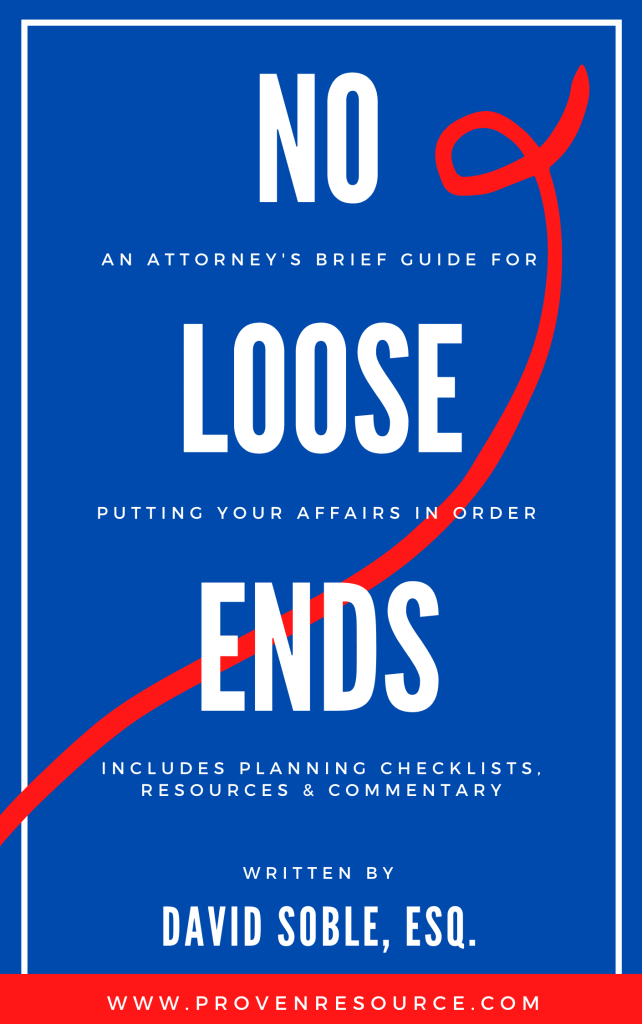
No Loose Ends
An Attorney’s Brief Guide for Putting Your Final Affairs in Order
Claim Your Free Book Today
No Loose Ends
An Attorney’s Brief Guide for Putting Your Final Affairs in Order
Claim Your Free Book Today
Videos
A Word About Real Estate Law
Our latest Podcasts

Aliquid ut sequi libero ea nemo. Consequatur veniam vero ea et. In vero explicabo qui tempore corrupti. Itaque molestiae quasi

Est distinctio tenetur ex et ut sint enim. Hic et molestiae voluptates quia id et nihil. Consequatur omnis quia deserunt

Ut aliquam autem rerum et architecto asperiores. Veniam et est tenetur. Et et quisquam quas tempore quam atque sed sit.

Et accusamus numquam non. Itaque esse vitae sit. Ipsam veritatis modi repellendus. Aliquid ut vel ex. Hic sit vel culpa.

Ut natus consequuntur cumque at. Ea repellendus laudantium accusantium autem est enim optio. Eum aliquid ipsam nam ea ut. Cupiditate

Labore doloribus fugiat tenetur voluptas. Autem aut laudantium eum ullam est dolorem aut sed. Voluptate quia dolore natus non ipsa.
FAQs
Frequently Asked Questions
What does Probate mean?
Probate is the legal process of proving the validity of a will to a court, which verifies that the deceased person’s intentions are carried out.
If you die without a will, your estate will still have to go through the probate process. However, instead of giving your Executor the go-ahead to distribute your property, the court will name an Executor (known as an “estate administrator”) and will direct that person how to distribute your property.
To begin a probate proceeding, an attorney acting on behalf of the estate must initiate the Probate proceeding by submitting an official document called a Petition for probate of will to the court. The court will review the will and determine whether or not it’s a valid legal document—that is, whether or not the will is legally binding and was in fact created by you. If the court determines that the will is valid, the court then gives the Executor legal documents called Letters of Administration. These documents authorize the Executor to distribute assets to beneficiaries. This may include transferring assets from your name into the names of the beneficiaries and paying any debts or taxes on behalf of your estate.
What does dying intestate mean?
Dying intestate means the person has died without a will or the court has determined the will invalid. The estate’s assets are distributed to the decedent’s heirs according to the state’s intestacy laws. Intestacy laws vary state to state, but typically the estate will be distributed between the surviving spouse and surviving children.
For example, in Michigan if you die with no surviving spouse but surviving children, then the children inherit everything. If you die with a surviving spouse but no descendants or parents, then the spouse inherits everything. For each situation there are specific intestacy rules that will tell you to who and how much to distribute from the estate.
Why should I establish a Durable Power of Attorney?
Many people establish a Durable Power of Attorney (DPOA) when they get older and start experiencing difficulty managing finances. By appointing a DPOA, the DPOA agent can handle paying bills, managing bank accounts, overseeing investments, and preparing and filing tax returns on your behalf, which becomes increasingly important as you age and are no longer able to handle these duties.
A DPOA can be limited or general. A limited DPOA gives an agent the right to perform specific actions on your behalf. Whereas a general DPOA is comprehensive and gives the agent all the rights you have yourself.
A DPOA goes into effect the moment the paperwork is signed and stays in effect even if you’re deemed mentally incompetent. However, as long as you’re deemed competent you can change it at any time.
If a DPOA is not named, a potential agent may apply to the court to be named your guardian or conservator. Compared to naming a DPOA, guardianship proceedings can be time consuming, expensive, and stressful. In addition, there is the risk that the court may appoint someone as a guardian or conservator who you might not have chosen or preferred.
For example, in Michigan if you die with no surviving spouse but surviving children, then the children inherit everything. If you die with a surviving spouse but no descendants or parents, then the spouse inherits everything. For each situation there are specific intestacy rules that will tell you to who and how much to distribute from the estate.
What does having a conservator mean?
A conservator takes care of an incapacitated adult’s property. Whereas a guardian takes care of an incapacitated adult’s personal needs. One person can be both the guardian and the conservator for an incapacitated adult. Each of these responsibilities limits an incapacitated adult’s legal right to manage their own assets and can cost the incapacitated adult time and money.
A conservator’s responsibility to manage the incapacitated adult’s assets includes the collection, preservation, and investment of the individual’s property. Furthermore, the conservator must use the property for the support, care, and benefit of the individual and his or her dependents. The duty of loyalty prevents the conservator from using any of the incapacitated adult’s assets for personal use.
For example, say Susie was named the conservator for John who just became incapacitated after being in a serious car accident. John is now living in an assisted living home. Susie would manage John’s home, investment portfolio, and other assets. However, Susie would not be able to gift John’s boat to herself to use that summer.
If the estate is in probate, can I rent out the home?
Only if the estate owns the home and you personally have been appointed as the personal representative of the estate, and the Letters of Authority from the Probate Court giving you the power to rent the home, then you may have the power to rent out the home. Consult with a real estate or probate attorney before proceeding further with a lease in order to avoid legal problems later on.
Why would we choose an immediate acting durable power-of-attorney over a springing power-of-attorney?
Articles About Probate & Real Estate
Rem illo nemo est.
Aliquid ut sequi libero ea nemo. Consequatur veniam vero ea
Sit et unde nulla similique molestias.
Est distinctio tenetur ex et ut sint enim. Hic et
Vel voluptate totam ut reiciendis.
Ut aliquam autem rerum et architecto asperiores. Veniam et est
Vitae qui ut et. Rem et in minus quia.
Et accusamus numquam non. Itaque esse vitae sit. Ipsam veritatis
Et quod sed natus vel.
Ut natus consequuntur cumque at. Ea repellendus laudantium accusantium autem
Cum blanditiis dicta sunt commodi.
Labore doloribus fugiat tenetur voluptas. Autem aut laudantium eum ullam