
Business Law










Business Law
We prevent and resolve problems related to Michigan and Ohio contract issues. Creating a good and viable contract between parties is of paramount importance. There is an old adage in business: “pay now or pay later.” This is never more true than when it comes to generating a contract. A written contract is most often the foundation for all business relationships.
The elements that must be established to demonstrate the formation of a legally binding contract are (1) offer; (2) acceptance; (3) consideration; (4) mutuality of obligation; (5) competency and capacity; and, in most circumstances, (6) a written instrument.
Contract law and legal theory have developed over the centuries and thousands upon thousands of cases center around the six elements listed above. The contract attorney’s job is to create contractual provisions that protect their client’s interests not only for when business relationships are good between parties, but more importantly, if and when these relationships deteriorate.
Different Types of Entities:
1. Sole Proprietorship or Sole Proprietor DBA:
A sole proprietorship is a business structure with one owner. A majority of small businesses in the United States are sole proprietorships because it is the easiest to set up and maintain. If you do nothing to choose a legal structure, you will default to a sole proprietorship because there is no paperwork to file apart from additional schedules on your personal income tax returns. However, if you plan to operate the business under a name that is not your personal name, then you must file for an assumed name “DBA” (doing business as) certificate with the county clerk of the county where your business is located.
There is no legal separation between the business and the owner in a sole proprietorship. This means that as a sole proprietor you will have unlimited responsibility for the liabilities and debts of the business. For instance, if the business cannot pay money owed to a vendor, that vendor may sue you individually. It also means that any income or losses of the business are accounted for on your personal tax return.
2. Partnerships: There are two types of partnerships:
General and Limited. A general partnership is similar to a sole proprietorship except that it has two or more owners. Like a sole proprietorship, it is easy to set up and maintain. There is no paperwork to file unless you are operating the business under a name that is different from the personal names of the owners in which case you need to file a “DBA” (doing business as) certificate with the county where the business is located. It is also highly recommended that the partners create a partnership agreement that addresses roles, responsibilities, and contingencies, in order to avoid disagreement and conflict between the partners. In a general partnership the owners have unlimited liability for the debts of the business. This means that even though the partners share the profits equally, each partner is 100% responsible for any debts of the business.A limited partnership has one or more general partners and one or more limited partners. The general partner(s) control and operate the business and are 100% liable for any debts of the business. The limited partner(s) do not participate in the operation of the business, and their personal liability is limited to their contribution to the partnership. Typically a limited partner is an investor.In order to form a limited partnership in Michigan, you must file a certificate of limited partnership with the Michigan Department of Licensing and Regulatory Affairs (LARA). If a limited partnership does not follow statutory requirements it will be treated as a general partnership so you should consult with an attorney before creating a limited partnership.
3. Limited Liability Company (LLC):
An LLC business entity was created to combine the advantages offered by both partnerships and corporations. An LLC provides the members (owners) of the business limited liability protection like shareholders in a corporation combined with the simpler operation and pass-through tax characteristics of a partnership. An LLC is created by filing Articles of Organization with Michigan Department of Licensing and Regulatory Affairs (LARA) along with the appropriate filing fee. Like a corporation, an LLC will be responsible for paying an annual fee with LARA to continue its existence.In addition to the Articles of Organization, members of an LLC are encouraged to establish an Operating Agreement. Particularly in a multi-member LLC, this is the basis on which you establish consistency and understanding about how the company will be managed and decisions made, duties of members, what contributions are required from members, how profits and losses will be calculated, limitations of liability and protection of members, and how members might be added, terminated or exit. The State of Michigan does not require an Operating Agreement to be filed in order to form an LLC, but rather this is a private document which governs the relationship of the members and may be amended by the members from time to time.
Do You Have A Business Law Concern?
Call Us For Your CONSULTATION
At 888.419.7013 or
Complete This Form.
We respond within 24 business hours.
Do You Have A Business Law Concern?
Call Us For Your CONSULTATION At 888.789.1715 or Complete This Form.
Business Law
Michigan attorneys who have both practical business experience as well as legal expertise are rare. David Soble is one of these exceptions. He is a business owner, former “big bank” insider, active real estate investor, and of course, lawyer. He brings over 30 years of real life business and real estate experience to the table for his business clients.
Operating a business is not easy. Business owners have to regularly deal with issues as mundane or as complicated as:choice of business entity; business tax consequences; organizational documents; operating agreements; partnership agreements; employment contracts; consulting contracts; non-compete agreements; compliance with bank and consumer protection laws; commercial negotiations; and an resolution of stockholder/partner/LLC disputes. This is not an exhaustive list. Whether you own a business or are opening a business, you owe it to yourself to speak with David Soble and his “proven resource” of business colleagues who can effectively address your concerns.
Different Types of Entities:
1. Sole Proprietorship or Sole Proprietor DBA: A sole proprietorship is a business structure with one owner. A majority of small businesses in the United States are sole proprietorships because it is the easiest to set up and maintain. If you do nothing to choose a legal structure you will default to a sole proprietorship because there is no paperwork to file apart from additional schedules on your personal income tax returns. However, if you plan to operate the business under a name that is not your personal name, then you must file for an assumed name “DBA” (doing business as) certificate with the county clerk of the county where your business is located.
There is no legal separation between the business and the owner in a sole proprietorship. This means that as a sole proprietor you will have unlimited responsibility for the liabilities and debts of the business. For instance, if the business cannot pay money owed to a vendor, that vendor may sue you individually. It also means that any income or losses of the business are accounted for on your personal tax return.
2. Partnerships: There are two types of partnerships: General and Limited. A general partnership is similar to a sole proprietorship except that it has two or more owners. Like a sole proprietorship, it is easy to set up and maintain. There is no paperwork to file unless you are operating the business under a name that is different from the personal names of the owners in which case you need to file a “DBA” (doing business as) certificate with the county where the business is located. It is also highly recommended that the partners create a partnership agreement that addresses roles, responsibilities, and contingencies, in order to avoid disagreement and conflict between the partners. In a general partnership the owners have unlimited liability for the debts of the business. This means that even though the partners share the profits equally, each partner is 100% responsible for any debts of the business.
A limited partnership has one or more general partners and one or more limited partners. The general partner(s) control and operate the business and are 100% liable for any debts of the business. The limited partner(s) do not participate in the operation of the business, and their personal liability is limited to their contribution to the partnership. Typically a limited partner is an investor.
In order to form a limited partnership in Michigan, you must file a certificate of limited partnership with the Michigan Department of Licensing and Regulatory Affairs (LARA). If a limited partnership does not follow statutory requirements it will be treated as a general partnership so you should consult with an attorney before creating a limited partnership.
3. Limited Liability Company (LLC): An LLC business entity was created to combine the advantages offered by both partnerships and corporations. An LLC provides the members (owners) of the business limited liability protection like shareholders in a corporation combined with the simpler operation and pass-through tax characteristics of a partnership. An LLC is created by filing Articles of Organization with Michigan Department of Licensing and Regulatory Affairs (LARA) along with the appropriate filing fee. Like a corporation, an LLC will be responsible for paying an annual fee with LARA to continue its existence.
In addition to the Articles of Organization, members of an LLC are encouraged to establish an Operating Agreement. Particularly in a multi-member LLC, this is the basis on which you establish consistency and understanding about how the company will be managed and decisions made, duties of members, what contributions are required from members, how profits and losses will be calculated, limitations of liability and protection of members, and how members might be added, terminated or exit. The State of Michigan does not require an Operating Agreement to be filed in order to form an LLC, but rather this is a private document which governs the relationship of the members and may be amended by the members from time to time.
By default, a single-member LLC is taxed as a sole proprietorship and a multi-member LLC is taxed as a partnership. But the member(s) may elect to have the LLC taxed as an S-Corporation or a C-Corporation. Tax election is separate from entity choice, and so members should consult a tax attorney or CPA with any questions and to maximize tax planning opportunities.
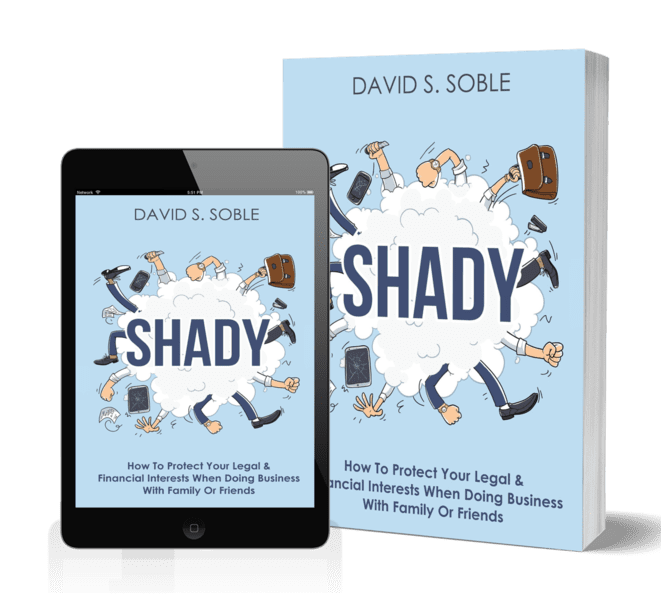
Shady
How to Protect Your Legal & Financial Interests When Doing Business With Family or Friends
Claim Your Free Book Now!
Claim Your Free Copy Today
Videos
A Word About Real Estate Law
Our latest Podcasts

Aliquid ut sequi libero ea nemo. Consequatur veniam vero ea et. In vero explicabo qui tempore corrupti. Itaque molestiae quasi

Est distinctio tenetur ex et ut sint enim. Hic et molestiae voluptates quia id et nihil. Consequatur omnis quia deserunt

Ut aliquam autem rerum et architecto asperiores. Veniam et est tenetur. Et et quisquam quas tempore quam atque sed sit.

Et accusamus numquam non. Itaque esse vitae sit. Ipsam veritatis modi repellendus. Aliquid ut vel ex. Hic sit vel culpa.

Ut natus consequuntur cumque at. Ea repellendus laudantium accusantium autem est enim optio. Eum aliquid ipsam nam ea ut. Cupiditate

Labore doloribus fugiat tenetur voluptas. Autem aut laudantium eum ullam est dolorem aut sed. Voluptate quia dolore natus non ipsa.
FAQs
Frequently Asked Questions
How many Investment properties can I put in one Limited liability company?
As many as you’d like to put under one corporate “shield.” There are other considerations you should take before doing so, such as the locations of the properties, or the property types. Consult with a real estate and business attorney before you proceed.
What is an operating agreement?
An operating agreement is a contract that sets forth the responsibilities between members of a limited liability company. Having an operating agreement is required if you are doing business and want the legal protections afforded by the state in which you are incorporated.
Do I really need a written agreement when opening a business with a family member?
Yes. Setting out your business goals and expectations with your business partner in writing is a good idea to protect against disputes and problems at a later date. Written agreements memorialize the oral representations made between parties. Nothing is more disappointing (or expensive) than when family members or friends fight over a business arrangement and there is nothing but a verbal agreement for the parties to rely upon.
What is better to form, a limited liability company or a c-corporation?
Which corporate formation one should select depends on the number of business owners, their legal needs, and their tax status. Consult with a business attorney beforehand.
Should I sign for a business loan as an individual?
If your business is taking out a business loan and you sign for the loan individually, you essentially become a ‘co-signor’ or ‘guarantor’ for your company’s loan obligation. Consult with a business attorney before you endorse any lending documents to avoid further and unnecessary legal and financial liability.
Why do I need a corporate resolution to close on an investment property that I own free and clear?
When it comes to doing any business on behalf of a company, the owners or members of the company must provide a corporate resolution. These are typically needed to transact any corporate business, such as opening a bank account, signing a contract, and signing a lease or deed. Title companies want to ensure that the person who is conveying the property on behalf of the company has authority to do so, even if the company is owned by a single person or entity.
I want to make my daughter 50/50 owner in my investment property LLC. Is this a good idea?
You can easily convey the properties from yourself to your company. A limited liability company is a legal entity and it can receive the deeds without any issue. There are, however, tax considerations that you will need to further investigate. Generally, if you transfer a property that you hold on your own over to your single member LLC, there is no taxable gain on the transfer. However, when your daughter becomes a 50% member of your LLC, then she has a taxable gain that is equal to 50% of the value of the properties, since she is a 50% owner of your LLC. I suggest that you consult a CPA who regularly works with real estate investors.
More Articles About Business
Rem illo nemo est.
Aliquid ut sequi libero ea nemo. Consequatur veniam vero ea
Sit et unde nulla similique molestias.
Est distinctio tenetur ex et ut sint enim. Hic et
Vel voluptate totam ut reiciendis.
Ut aliquam autem rerum et architecto asperiores. Veniam et est
Vitae qui ut et. Rem et in minus quia.
Et accusamus numquam non. Itaque esse vitae sit. Ipsam veritatis
Et quod sed natus vel.
Ut natus consequuntur cumque at. Ea repellendus laudantium accusantium autem
Cum blanditiis dicta sunt commodi.
Labore doloribus fugiat tenetur voluptas. Autem aut laudantium eum ullam

Why Clients Choose Us
Soble Law, led by attorney David Soble, is a boutique law firm based in Michigan, focused on real estate law, probate, and contract litigation. With over 35 years of legal and big corporate banking experience, David Soble and his legal team offer a niche alternative to large national firms to informed clients who value senior-corporate-level counsel, financial and realty-industry insight, and education-forward service. They provide practical legal solutions that protect clients’ property and financial interests. Known for their no-nonsense approach, the firm represents individuals, families, and businesses across Michigan and Ohio, offering clear guidance through complex legal matters.
- Former Big Bank "Insider"
- HigHest Peer and Client Ratings
- 24 Hour Response
- 30 +Years of Legal & Business Experience
- Affordable & Approachable
- Innovative & Creative solutions
Why Clients Choose Us
Soble Law, led by attorney David Soble, is a boutique law firm based in Michigan, focused on real estate law, probate, and contract litigation. With over 35 years of legal and big corporate banking experience, David Soble and his legal team offer a niche alternative to large national firms to informed clients who value senior-corporate-level counsel, financial and realty-industry insight, and education-forward service. They provide practical legal solutions that protect clients’ property and financial interests. Known for their no-nonsense approach, the firm represents individuals, families, and businesses across Michigan and Ohio, offering clear guidance through complex legal matters.
- Former Big Bank "Insider"
- HigHest Peer and Client Ratings
- 24 Hour Response
- 30 +Years of Legal & Business Experience
- Affordable & Approachable
- Innovative & Creative solutions
We Reduce Legal Exposure & Financial Risk. Every Day.
Real Estate Law
Real estate and finance law are their own legal specialties. So how do you determine which attorney you should work with...
Contract Law
Contracts regulate expectations between parties. Working without a contract is comparable to walking a high wire without a net.
Business Law
Attorneys having years of both practical business experience as well as legal expertise are rare. David Soble is one of these...
Financial Disputes
David Soble has decades of experience as a 'big bank insider." He and his business management team are uniquely situated when it comes to handling our clients stressful financial....
Litigation
We regularly and successfully litigate real estate and contract issues. While we prefer to first resolve our client's issues reasonably and amicably, we can and certainly will escalate....
Probate & Estate Planning
For most people, their home, or other real estate, is the most valuable asset that they own. We're dedicated to protecting our clients' assets and ensure that their legal interests...
FAQs
Frequently Asked Questions
How many Investment properties can I put in one Limited liability company?
As many as you’d like to put under one corporate “shield.” There are other considerations you should take before doing so, such as the locations of the properties, or the property types. Consult with a real estate and business attorney before you proceed.
What is an operating agreement?
An operating agreement is a contract that sets forth the responsibilities between members of a limited liability company. Having an operating agreement is required if you are doing business and want the legal protections afforded by the state in which you are incorporated.
Do I really need a written agreement when opening a business with a family member?
Yes. Setting out your business goals and expectations with your business partner in writing is a good idea to protect against disputes and problems at a later date. Written agreements memorialize the oral representations made between parties. Nothing is more disappointing (or expensive) than when family members or friends fight over a business arrangement and there is nothing but a verbal agreement for the parties to rely upon.
What is better to form, a limited liability company or a c-corporation?
Which corporate formation one should select depends on the number of business owners, their legal needs, and their tax status. Consult with a business attorney beforehand.
Should I sign for a business loan as an individual?
If your business is taking out a business loan and you sign for the loan individually, you essentially become a ‘co-signor’ or ‘guarantor’ for your company’s loan obligation. Consult with a business attorney before you endorse any lending documents to avoid further and unnecessary legal and financial liability.
Why do I need a corporate resolution to close on an investment property that I own free and clear?
When it comes to doing any business on behalf of a company, the owners or members of the company must provide a corporate resolution. These are typically needed to transact any corporate business, such as opening a bank account, signing a contract, and signing a lease or deed. Title companies want to ensure that the person who is conveying the property on behalf of the company has authority to do so, even if the company is owned by a single person or entity.
I want to make my daughter 50/50 owner in my investment property LLC. Is this a good idea?
You can easily convey the properties from yourself to your company. A limited liability company is a legal entity and it can receive the deeds without any issue. There are, however, tax considerations that you will need to further investigate. Generally, if you transfer a property that you hold on your own over to your single member LLC, there is no taxable gain on the transfer. However, when your daughter becomes a 50% member of your LLC, then she has a taxable gain that is equal to 50% of the value of the properties, since she is a 50% owner of your LLC. I suggest that you consult a CPA who regularly works with real estate investors.
We're one of the best reviewed law firms in the state.
Don’t take our word for it! See hundreds of our reviews on Google, AVVO, Martindale-Hubbell and Linked In.
EXCELLENTTrustindex verifies that the original source of the review is Google. This company allows you to have peace of mind, Not worry about the laws that are associated the I was having.Posted onTrustindex verifies that the original source of the review is Google. I would like to thank the David Soble Law firm for alllll the assistance they provided me. All the staff were very professional, patient and supportive. Once again, David, Thomas and Andrew thank YOU so very much for your time and thoughtfulness with also handling my mom’s concerns. I am very thankful! FeliciaPosted onTrustindex verifies that the original source of the review is Google. This whole firm is a carefully calculated scam company. Beware and stay away. He charges for every word he utters to you through hidden fees. He ultimately dropped my father’s case at the worst time possible. Blaming my father for being senile which is partially true but that doesn’t free him of having an unlawful practice. He was actually bought out by the person we were suing which is illegal and could get him disbarred. Haven’t filed a grievance yet but may still do that. He also is super mean and I quote yells for “impact” to his customers. STAY AWAY!!!!!!!!!!! WE WASTED THOUSANDS OF DOLLARS TO ULTIMATELY BE SOLD OUT. He also made sure to cash the last payment before dropping our case. After which he agreed to a payment plan.. HE IS A CON ARTIST!!!Posted onTrustindex verifies that the original source of the review is Google. Thomas Rouke represented us in a difficult land situation. I found him to be extremely professional and time conscious with our matter. We will definitely call Thomas and Soble Law if the need arises in the future.Posted onTrustindex verifies that the original source of the review is Google. Great experience AND RESULTS! Thank you to David and his team!!Posted onTrustindex verifies that the original source of the review is Google. We all need a great attorney every once in a while, and I would like to refer David Soble to anyone who is looking to be represented by an incredibly knowledgeable, mature, and solid attorney. I would refer him to my closest friends without any reservations at all!Posted onTrustindex verifies that the original source of the review is Google. Start with Soble Law. I couldn’t believe how quickly my issue was resolved, and relayed to me in plain terms. David knew exactly what issue I was having and in about 30 seconds spelled out all of the steps and likely outcome. I had been working with another lawyer for months to get part of the answer. His knowledge base is just that much more immense and that is what you are looking for. The staff I interacted with was also super helpful, efficient and respectful. So start here and go in a straight line. Legal issues are stressful. Leave that to someone extremely competent who will get back to you instantly with full answers.Posted onTrustindex verifies that the original source of the review is Google. Amazing attorney! Very knowledgable staff, very professional! Highly recommend!Posted onTrustindex verifies that the original source of the review is Google. Mr. Soble was very easy to contact. We were given great advice on the problem we presented to him. His firm was very friendly and professional in our contacts with them, and Mr. Soble himself. He took his time to explain the pro’s and con’s of the issue we had, and how best to proceed. Would highly recommend, as this is the second time we contacted him, and received sound advice and action both times.Verified by TrustindexTrustindex verified badge is the Universal Symbol of Trust. Only the greatest companies can get the verified badge who has a review score above 4.5, based on customer reviews over the past 12 months. Read more
Your Legal Next Steps
Check Out Our Resource Library. We have numerous free books, articles, and industry checklists for your use.